KNOWLEDGE · COOPERATION · RESILIENCE

Democratic Resilience Group

01 / DRG

About the Group

AN INDEPENDENT, VOLUNTARY PLATFORM FOR EXPERTISE, COOPERATION AND ACTION TO PROTECT DEMOCRACY IN ROMANIA

Democratic resilience is built through strategic foresight, knowledge and cooperation, before risks become crises.

An initiative launched at the Euro-Atlantic Forum 2026.

WHY THE DEMOCRATIC RESILIENCE GROUP WAS ESTABLISHED

FROM INDIVIDUAL EXPERTISE TO STRATEGIC COOPERATION AND PRACTICAL SOLUTIONS

How can multidisciplinary cooperation among academia, the media, security experts and civil society turn expertise into practical solutions for anticipating threats and strengthening Romania’s democratic resilience?

Contemporary democracies face an increasingly complex range of risks and threats, including hybrid operations, information manipulation, foreign interference, disinformation campaigns, social polarisation and the exploitation of institutional vulnerabilities. These phenomena can undermine electoral integrity, the functioning of democratic institutions, public trust and the resilience of Romanian society. Addressing these challenges effectively requires a more coordinated approach and closer cooperation among academia, the media, security experts and civil society organisations. Combining research expertise with practical experience and strategic analysis is essential to identifying vulnerabilities, anticipating risks and developing practical solutions.

The Democratic Resilience Group (DRG) is an independent platform for strategic reflection and multidisciplinary cooperation. It aims to bring together experts with complementary skills to deepen understanding of contemporary threats to democracy and develop practical solutions for strengthening Romania’s democratic resilience.

THE DRG’S MISSION is to turn expertise into relevant knowledge and use that knowledge to develop practical recommendations that inform public policy and help protect democratic values.

FROM MISSION TO IMPACT

STRENGTHENING DEMOCRATIC RESILIENCE THROUGH EXPERTISE AND ACTION

How can an independent platform for expertise help anticipate hybrid threats, protect electoral integrity and strengthen public trust in Romania’s democratic processes and institutions?

The Group seeks to develop a shared understanding of hybrid threats and operations involving information manipulation and foreign interference. It promotes solutions that protect electoral integrity, democratic pluralism, freedom of expression and public trust.

The DRG aims to strengthen Romania’s ability to anticipate, identify and address threats to democratic processes through interdisciplinary research, monitoring of information risks, exchange of expertise and independent recommendations. It seeks to become a national point of reference for expertise and cooperation, connected to European and Euro-Atlantic debates and initiatives on democratic resilience.

The DRG will pursue four complementary objectives.

The Group will focus on two priorities.

FROM EXPERTISE TO SHARED RESPONSIBILITY

A COMMUNITY OF EXPERTS FOR ROMANIA’S DEMOCRATIC RESILIENCE

Why is it essential to mobilise independent expertise in times of national and regional crisis? How can professionals from complementary fields turn knowledge, dialogue and cooperation into a shared effort to protect democracy?

In times of crisis, defending democracy requires both the work of state institutions and the ability of society as a whole to act together. It depends on knowledge and solidarity among professionals. Amid national and international uncertainty, hybrid threats, foreign interference, information manipulation and social polarisation, strengthening democratic resilience becomes a shared responsibility. When challenges cross disciplinary and institutional boundaries, individual expertise is essential. It becomes more valuable when different professional perspectives inform one another and lead to practical solutions.

We invite you to join an independent community of experts who share the conviction that protecting democracy begins with understanding risks and grows through cooperation and shared responsibility.

DRG membership offers an opportunity to contribute to an initiative of national relevance in four ways.

The Group will bring together academics and researchers to analyse complex phenomena and develop resilience indicators. Civil society organisations and think tanks will help connect research to public policy, democratic participation and societal needs. Investigative journalists and fact-checkers will document developments, verify information and help explain how manipulation spreads. Membership will reflect professional expertise, integrity, willingness to participate and complementary skills, building a community that can turn interdisciplinary perspectives into meaningful contributions to democratic resilience.

The DRG aims to create a space where each member’s expertise is valued, different perspectives inform constructive dialogue and knowledge supports action. Members can contribute to the shared objective in different ways and at different times, according to their availability and skills. Participation is voluntary and grounded in professional independence, with members free to contribute according to their interests and availability.

Democracy depends on functioning institutions and a resilient society that draws on expertise to understand immediate threats, anticipate medium-term changes and help develop sustainable long-term solutions.

The Center for Human Rights and Migration at the Romanian-American University provides a framework for cooperation, dialogue and administrative coordination, and serves as the Group’s secretariat.

Contact: Silvia Tăbușcă, [email protected]
02 / DRG

Members

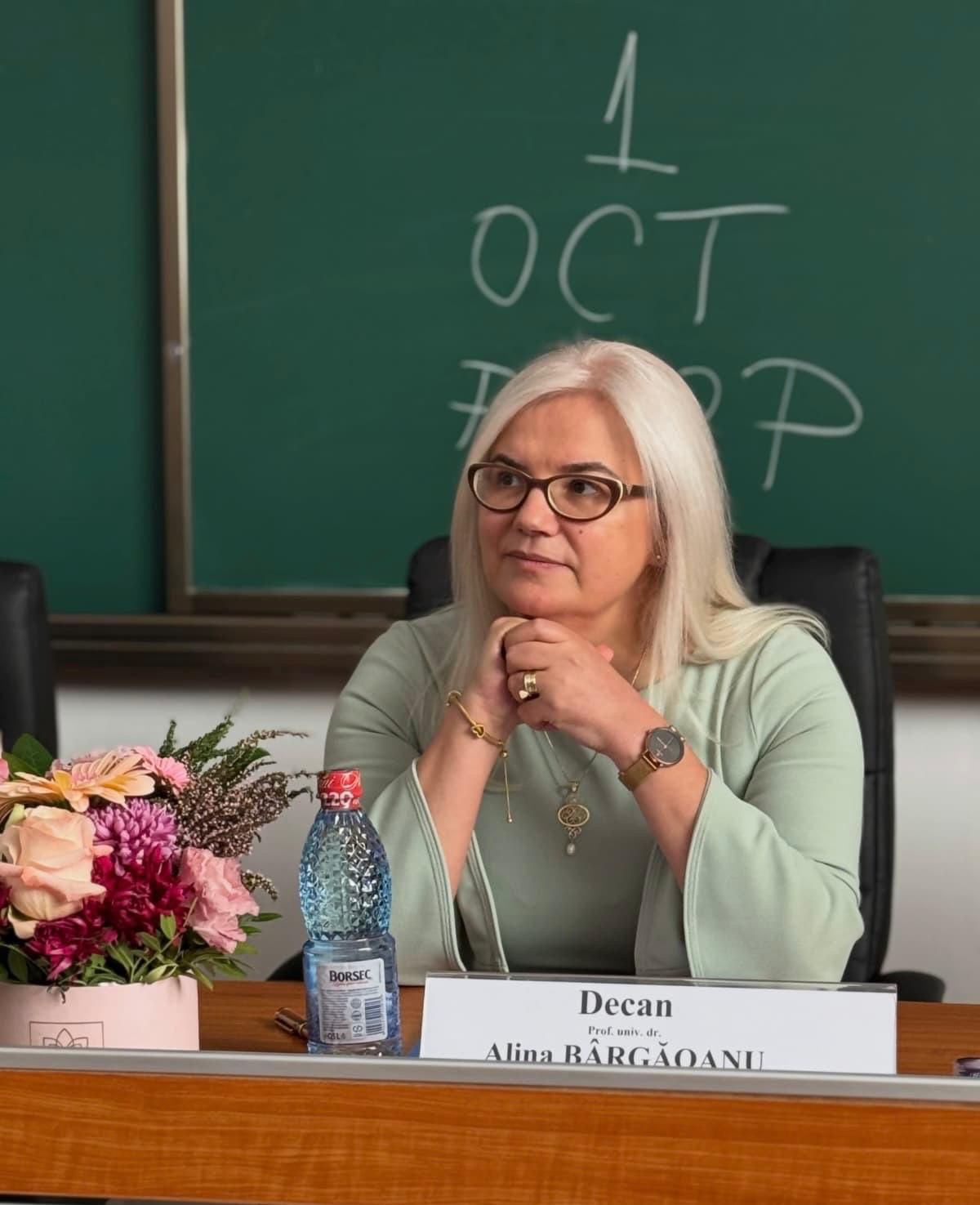
Alina Bârgăoanu

Alina Bârgăoanu

Professor, PhD, Dean of the Faculty of Communication and Public Relations, SNSPA.

A member of the Diplomatic Council and an affiliated researcher with the Swedish Agency for Peace, Security and Development, working group “Hybrid Threats, including Disinformation”; a member of the advisory board of the European Digital Media Observatory (2020–2026); a contributor to Visegrad Insight (October 2021–September 2022). Her research interests focus on influence activities in the digital environment, cognitive security, and the relationship between technology, democracy, and society.

Ștefan Cibian

Ștefan Cibian

Ștefan Cibian, PhD, is co-founder and Executive Director of the Făgăraș Research Institute (FRI), where he coordinates the Centre for Global Affairs and Postdevelopment (C-GAP). He teaches at Babeș-Bolyai University in Cluj-Napoca and the University of Bucharest. His courses cover international relations, international development, international organisations, peacebuilding and postcolonial Africa. His research examines development and statehood in sub-Saharan Africa and Central and Eastern Europe (CEE), CEE–Africa and EU–Africa relations, development policy, international relations theory, peacebuilding and fragile states, democratisation and authoritarianism, civil society and philanthropy, migration, human rights, heritage and education policy. His work spans sub-Saharan Africa, CEE, the Black Sea region, the European Union and transatlantic relations. He is particularly interested in interdisciplinary research and connecting research with public policy, practice and local communities. Before joining FRI, he worked with Chatham House, the Royal Institute of International Affairs in London, the South African Institute of International Affairs in Johannesburg, the European Commission in Brussels and Dakar, the World Bank Group and Romania’s Association for Community Relations. He was also a teaching assistant at Central European University. He sits on the Executive Committee of the European Association of Development Research and Training Institutes (EADI) and is President of ARCADIA, the Romanian Association for International Cooperation and Development. He is a member of EISA, BISA, CEEISA, ERNOP, ISA and ECPR. He previously served as President of FOND, the Romanian development NGO platform, and Treasurer of CONCORD Europe, the European confederation of humanitarian and development NGOs. He has served on the boards of the Țara Făgărașului Community Foundation, the Romanian Federation of Community Foundations and the UiPath Foundation. He holds a PhD in Political Science and International Relations (2012) and a master’s degree in Public Policy (2006, with distinction), both from Central European University. He also holds degrees in Political Science from Babeș-Bolyai University (2004) and Law from 1 Decembrie 1918 University in Alba Iulia (2005). He studied and conducted research at the University of Salzburg, the University of Ljubljana and UCLA.

Luca Ciubotaru

Luca Ciubotaru

Luca Ciubotaru holds degrees in law and European studies and received a scholarship from Sorbonne Paris Nord University. He is a doctoral candidate in constitutional law and teaches at the University of Bucharest Faculty of Law, where he covers topics including the theory of the state, fundamental rights, political institutions and parliamentary law.

From 2014 to 2015, he served as Romania’s Youth Delegate to the United Nations. From 2015 to 2017, he advised the minister responsible for public consultation and civic dialogue, contributing to efforts to improve transparency in central and local government, reduce red tape, promote open government and improve policies for NGOs. Over the past ten years, he has gained extensive experience in constitutional law and fundamental rights, working for institutions including the Government of Romania and the Presidential Administration, where he worked in and coordinated the Constitutional and Legislative Department. Since 2015, he has served as an adviser to the President of the Constitutional Court.

With 15 years of experience in the non-governmental sector, Luca has founded three NGOs and held leadership positions in two others. He studied community organising in the United States as a US Department of State fellow and graduated from Harvard Kennedy School.

Over the past nine years, he has worked with civic communities in north-eastern Romania. In 2017, he founded Rădăuțiul Civic to promote active citizenship in local communities and develop civil society in underserved areas, particularly small towns and rural communities. The association now focuses on civic education, critical thinking, strategic litigation and advocacy, expanding the civic network established in Suceava County in 2022, and developing technology tools that strengthen civil society’s capacity. He believes citizens can bring about positive change by participating in the life of their communities.

Andrei Luchici

Andrei Luchici

AI Researcher, Technology Leader and Educator.

Andrei Luchici is a lecturer and Director of the Artificial Intelligence Research Centre (CRAI) at the Romanian-American University. His research focuses on autonomous organisations in which AI agents collaborate, plan, negotiate and carry out tasks within defined objectives and constraints.

Before entering academia, Andrei served as Chief Technology Officer at three companies, developing AI products for advertising technology and enterprise software. This experience gives him practical insight into how to take AI solutions from experimental models to use in organisations. As an experienced independent trainer, he has delivered AI programmes for SMEs, executive teams and multinational companies in banking, retail, manufacturing, aerospace and professional services. He also teaches AI for Business on an MBA programme in Germany and co-founded the AI Training Centre at the Romanian-American University.

His work combines artificial intelligence, the neuroscience of decision-making and complexity thinking to explore how AI can help us understand and guide organisations, markets and other adaptive systems.

Cezar Manu

Cezar Manu

A former teacher and a journalist with more than 20 years of experience, he has been debunking false news stories and narratives for the specialist publication Veridica for over four years. Alongside this work, he edits radio news and brings stories from sporting history back to public attention.

Antonia Pup

Antonia Pup

PhD Candidate, European University Institute

Antonia-Laura Pup is a doctoral researcher at the European University Institute (EUI), where she studies variation in European strategic autonomy. A Fulbright scholar and Georgetown University graduate, she specialised in technology and national security policy, completing her master’s degree with distinction and representing her graduating cohort as Graduate Class Marshal. She also holds a master’s degree in International Security from Sciences Po in Paris. She was a teaching assistant at Georgetown, where she received the 2026 Teaching Assistant of the Year award in political and social sciences.

She previously advised the Chair of the Defence Committee in the Romanian Parliament and a Member of the European Parliament. She was also a fellow with the United States Congress’s Select Committee on the Strategic Competition between the United States and the Chinese Communist Party.

Antonia is a foreign policy analyst whose articles and analyses have appeared in The National Interest, The Cipher Brief, EU Reporter, New Eastern Europe, Balkan Insight and Small Wars Journal, where she serves as Assistant Editor. Her research interests include technology diplomacy, European strategic autonomy, technology as an instrument of statecraft in a transatlantic context, cyber-enabled influence operations, Romania’s foreign and security policy, and China’s influence in the Black Sea region.

Laura Ștefan

Laura Ștefan

Laura Ștefan coordinates anti-corruption work at Expert Forum and has over ten years of professional experience in the public and private sectors. She also works as an international expert for the European Commission, UNDP, OECD and other international organisations on legal reform, anti-corruption and anti-money laundering. In 2011, the European Commission appointed her to its Expert Group on Corruption.

From 2005 to 2007, she was a director at the Romanian Ministry of Justice, responsible for anti-corruption policy. She drafted and advocated for anti-corruption legislation, developed public awareness programmes and worked on reform of the public prosecution service. She has served as head of delegation and bureau member at GRECO, senior representative to SPAI and SPOC, Romania’s representative to the OECD Anti-Corruption Network and UN global forums on corruption and organised crime, and a member of the UNDP Anti-Corruption Practitioners Network. She previously served as a legal adviser on two USAID-funded programmes.

Laura completed her Master of Laws (LLM) at the University of Cambridge in 2003–2004. In 2015, she received the Woman of Courage of the Year Award from the United States Embassy in Bucharest and an Eisenhower Fellowship that included a two-month visit to the United States.

Silvia Tăbușcă

Silvia Tăbușcă

Silvia Tăbușcă is the Coordinator of the Human Security Program at the European Center for Legal Education and Research, Director of the Center for Human Rights and Migration, and Law Lecturer at the Romanian-American University, School of Law. She is part of the INTERPOL Human Trafficking Expert Group (HTEG), the EU Network against Corruption - Romania, GI-TOC, and of the Council of Europe’s Network of Anti-Trafficking Lawyers. In 2021, she served as Personal Advisor to the Romanian Minister of Justice on issues related to the rule of law, anti-corruption, and organized crime. She is currently a Management Committee Member of the EU BlueRights Action, an initiative developing a global network of experts ensuring universal protection of human rights at sea, as well as an expert member in several international networks funded by the EU and COST.

With over 20 years of professional experience in international human rights protection, Silvia’s expertise covers human security and global justice. She is widely recognized as a leading consultant, trainer, and coach, having worked with numerous international organizations, including the UNHCHR, UNHCR, UNDP, UNODC, ILO, IOM, the United Nations University – Centre for Policy Research (Modern Slavery Programme), the Council of Europe and GRETA, EU institutions, and various Member State embassies in Romania. She has also provided high-level legal and policy expertise to Latta & Co., Milieu Law & Policy Consulting, and Ramboll Management Consulting.

Loredana Vladu

Loredana Vladu

Associate Professor Loredana Vladu, PhD, directs the Communication Department at the Faculty of Communication and Public Relations of the National University of Political Studies and Public Administration (SNSPA). She coordinates the master’s programme in Project Management, internationally accredited by the Project Management Institute’s Global Accreditation Center, and directs the Center for EU Communication Studies. From 2016 to 2019, she coordinated the Jean Monnet module “Patterns of Europeanization in Central and Eastern Europe” and the project “The State of the Nation: Building an Innovative Tool for Evidence-Based Public Policy”, implemented in partnership with Romania’s General Secretariat of the Government under the Operational Programme for Administrative Capacity. She completed postdoctoral studies in Communication Sciences and a PhD in Sociology at SNSPA and holds an MBA from Central European University.

More invited experts will join the group

More experts will be added to the DRG in the coming period.

Top